


North Carolina’s real estate market has been growing in recent years due to its beautiful shorelines and mountains, making it a desirable place to live for many people. The combination of rising home prices, decreased inventory, and a competitive market suggests that North Carolina is currently leaning toward a seller’s market.
Home prices in North Carolina experienced a 3.7% year-over-year increase in November 2023, indicating a stable and appreciating market. While challenges exist, such as reduced sales activity and inventory, there are no imminent signs of a housing market crash. The market appears resilient, adapting to the ongoing dynamics.
How is the North Carolina housing market doing currently?
According to Redfin, in November 2023, the year-over-year analysis revealed a 3.7% increase in home prices, indicating a robust market. However, the number of homes sold experienced an 8.0% decline, accompanied by a 5.6% reduction in the inventory of homes for sale. These figures highlight the intricate balance between demand and supply in the North Carolina housing market.
On average, 10,778 homes were sold in November 2023, representing an 8.0% decrease compared to the previous year. The median days on the market stood at 39 days, emphasizing the importance of a swift decision-making process for both buyers and sellers.
North-Carolina Housing Demand
Examining the competitiveness of the market, November 2023 witnessed 23.6% of homes selling above the list price, a slight decrease of 2.5 points from the previous year. Conversely, the percentage of homes with price drops decreased from 26.0% to 22.5%. The sale-to-list price ratio saw a marginal increase, reaching 98.3% year over year.
Top 10 Metros in North-Carolina with the Fastest Growing Sales Price
- Elizabeth City, NC: 34.6%
- Hickory, NC: 34.5%
- Chapel Hill, NC: 28.4%
- Thomasville, NC: 26.8%
- Rocky Mount, NC: 25.7%
- Canton, NC: 23.6%
- Murraysville, NC: 22.2%
- Shelby, NC: 21.5%
- Wilson, NC: 21.1%
- Troutman, NC: 20.8%
North-Carolina Housing Supply
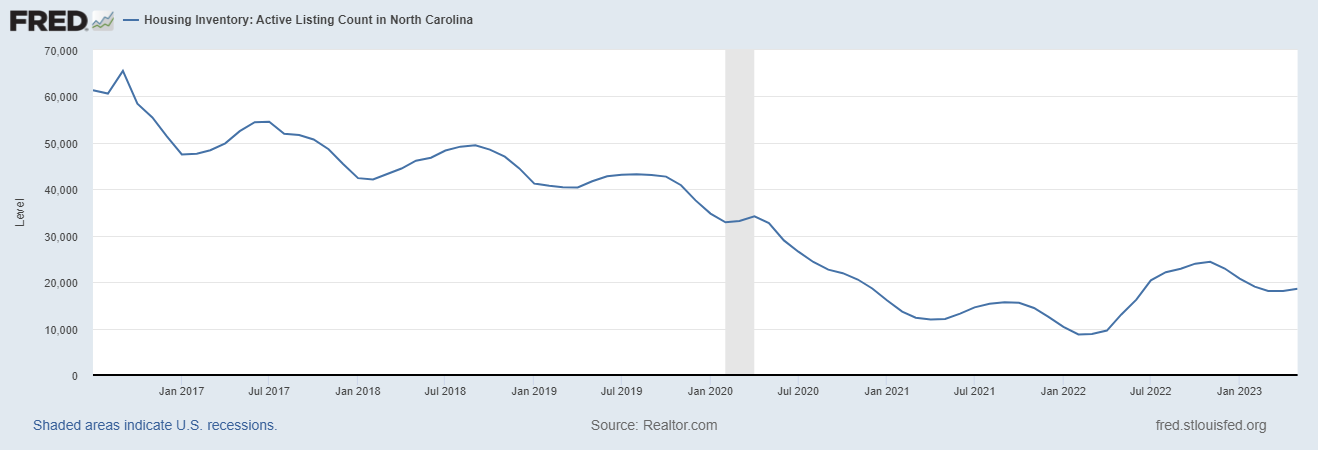
Assessing the supply side, November 2023 recorded 42,442 homes for sale, reflecting a 5.6% decline year over year. Newly listed homes, however, increased by 2.9%, reaching 11,179. The average months of supply reduced to 3 months, underlining the ongoing challenges in meeting buyer demand.
Is Now a Good Time to Buy a House in NC
Given the competitive nature of the market and the slight decrease in homes selling above list price, potential buyers should carefully evaluate their options. Consultation with real estate professionals is recommended to make informed decisions based on individual circumstances.
North Carolina Housing Market Forecast for 2024
The North Carolina housing market’s positive trajectory is a reflection of the state’s vibrant economy, diverse job opportunities, and attractive lifestyle offerings. The combination of urban centers, scenic landscapes, and a favorable cost of living has drawn in both residents seeking long-term settlements and investors looking for lucrative opportunities.
Average Home Value and Trends
According to Zillow, the average home value in North Carolina currently stands at $316,103, reflecting a 3.1% increase over the past year. This robust growth is indicative of a thriving real estate landscape. Homes, on average, go pending in approximately 19 days, showcasing the high demand and competitive nature of the market.
Inventory and New Listings
As of December 31, 2023, there are 31,056 homes for sale in North Carolina. The state has witnessed 8,596 new listings, emphasizing the dynamic nature of the market as sellers respond to increasing demand. This surge in inventory signifies a healthy and active real estate environment.
Median Sale and List Prices
The median sale price, as of November 30, 2023, is $309,667, while the median list price is $363,300 as of December 31, 2023. The median sale to list ratio is 0.996, underscoring the close alignment of listing and sale prices. These metrics provide valuable benchmarks for both buyers and sellers in navigating the market.
Market Dynamics: Sales Performance
Examining sales performance metrics, 31.0% of transactions in North Carolina were recorded above list price, highlighting the competitiveness of the market. Conversely, 51.1% of sales occurred under list price, showcasing a balanced range of options for potential buyers.
Top 10 Metro Areas in NC with Projected Growth in 2024
Looking ahead to 2024, certain regions in North Carolina are expected to experience notable growth in home prices. Based on data projections:
- Sanford, NC: Anticipates a growth of 7.2% by December 31, 2024.
- Laurinburg, NC: Forecasts a rise of 6.6% by the end of 2024.
- Wilson, NC: Projects an increase of 6.5% by December 31, 2024.
- Kinston, NC: Envisions a growth of 6.5% by the close of 2024.
- Boone, NC: With a projected growth of 6.4% by December 31, 2024, Boone presents itself as a market with potential appreciation. The strategic location and local amenities contribute to its attractiveness for prospective homebuyers and investors alike.
- Rocky Mount, NC: Anticipating a 6.2% increase in home prices by the end of 2024, Rocky Mount showcases a robust real estate environment. The city’s economic dynamics and housing market trends position it as a noteworthy area for consideration.
- Lumberton, NC: Forecasting a 6.2% growth in home prices, Lumberton offers opportunities for those seeking to engage with a market characterized by steady appreciation. Factors such as infrastructure development and community growth contribute to its positive outlook.
- Brevard, NC: Projecting a rise of 6.1% in home prices, Brevard exhibits resilience in its real estate landscape. The town’s unique charm, combined with economic factors, makes it an intriguing prospect for those considering property investment.
- Albemarle, NC: With an expected growth of 6%, Albemarle signifies stability and potential returns for homeowners and investors. The town’s economic indicators and housing market metrics contribute to its appeal as a growth-oriented market.
- Hickory, NC: Anticipating a 5.9% increase in home prices, Hickory stands out as a market with diverse opportunities. The city’s economic diversity and cultural amenities make it an attractive destination for those seeking a balance between growth and lifestyle.
These areas present promising opportunities for both homebuyers and investors, as they are poised to outpace the broader market in terms of appreciation. Currently, the North Carolina housing market leans towards being a seller’s market. This is evident from the high demand, as reflected in the average home value increase of 3.1% over the past year.
Will The North Carolina Housing Market Crash?
Based on the current data and market trends, there is no indication of an imminent housing market crash in North Carolina. The steady increase in average home values, coupled with strong demand and competitive dynamics, suggests a resilient and stable housing market. However, it’s essential to monitor economic and external factors that could potentially influence the market in the future.
Market Fundamentals
Several key factors contribute to the current stability of the North Carolina housing market:
- Economic Strength: North Carolina boasts a diverse and growing economy. Major industries such as technology, healthcare, finance, and manufacturing have a strong presence in the state. This economic diversity provides a solid foundation for sustained housing demand.
- Population Growth: The state continues to attract a steady stream of newcomers due to its job opportunities, quality of life, and relatively affordable cost of living compared to other desirable areas. This population growth supports housing demand.
- Supply and Demand Balance: While some areas may experience housing shortages, the overall supply and demand balance in North Carolina remains relatively stable. This equilibrium helps prevent dramatic price fluctuations that could trigger a crash.
<<Read About Charlotte Housing Market Trends>>>
<<Read About Raleigh Housing Market Trends>>>
North Carolina Housing Supply Graph
Data Sources:
- https://www.zillow.com/research/data/
- https://www.zillow.com/nc/home-values/
- https://www.zillow.com/rental-manager/market-trends/nc/
- https://fred.stlouisfed.org/series/ACTLISCOUNC#
- https://www.redfin.com/state/North-Carolina/housing-market
- https://www.rent.com/research/average-rent-price-report/
- https://www.bankrate.com/real-estate/housing-market/north-carolina/
- https://www.propeterra.com/resource-center/charlotte-north-carolina-banking
- https://today.yougov.com/topics/travel/articles-reports/2021/04/13/us-states-ranked-best-worst-according-americans
