


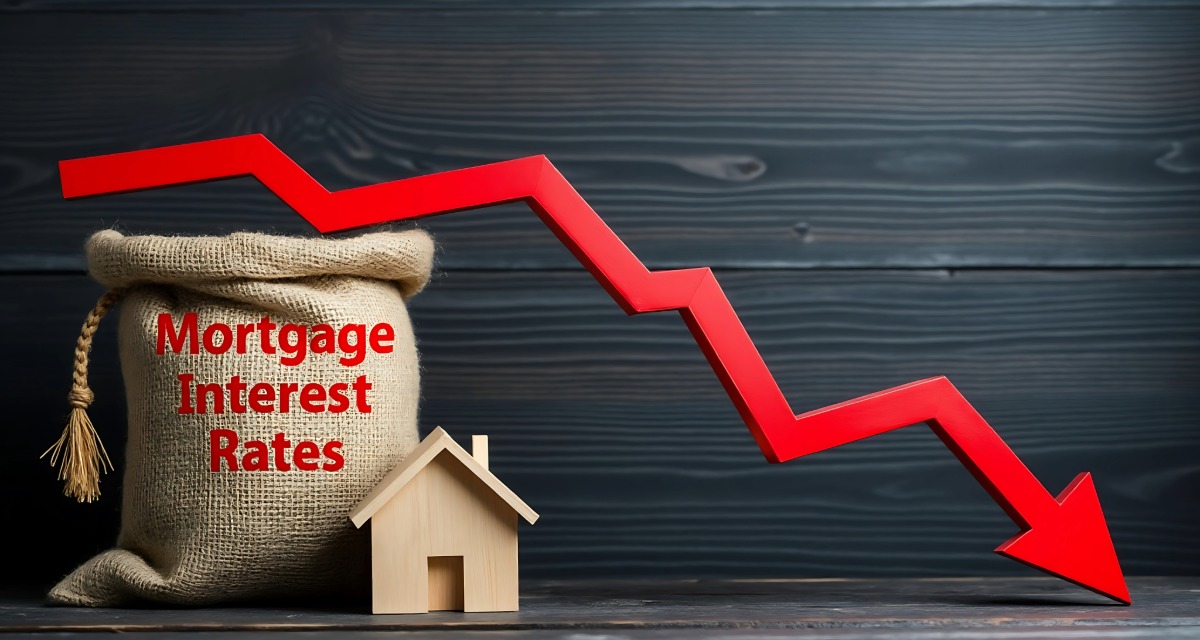
It feels like yesterday we were talking about sub-3% mortgage rates, doesn’t it? Those days might feel like a distant dream, especially when you’re looking to buy a home or refinance in the near future. The big question on many minds right now, and one I hear a lot, is: “How to get a 4% interest rate on a mortgage in 2026?” While a standard 4% interest rate on a 30-year fixed mortgage in 2026 might be a tough reach, my experience tells me it’s not entirely out of the question if you’re smart, strategic, and willing to explore less common paths. The trick is understanding not if it’s possible, but how to make it possible for you.
How to Get a 4% Interest Rate on a Mortgage in 2026
The Reality of 2026: Setting Expectations
Let’s start with a dose of reality. Many of the smart folks who study these things, the housing economists, generally agree that those super low pandemic-era rates are probably behind us for a while. Why? Well, things like inflation sticking around longer than expected and robust Treasury yields mean that mortgage rates won’t just magically drop back to 3% or even 4% overnight for everyone.
Based on what I’ve seen and the data out there for February 2026, here’s a quick snapshot of average mortgage rates:
| Mortgage Type | Average Rate (February 2026) |
|---|---|
| 30-Year Fixed | 6.13% |
| 15-Year Fixed | 5.44% |
| 30-Year VA | 5.52% |
| 15-Year VA | 5.11% |
| 5/1 VA ARM | 4.95% |
| USDA (Low Income) | 4.25% |
As you can see, the average 30-year fixed rate is quite a bit higher than 4%. So, if you’re dreaming of a 4% rate, you’re likely going to need to get creative. This isn’t about wishing the market changes; it’s about making smart moves within the market we have.
Strategies to Reach a Near 4% Mortgage Rate in 2026
Achieving a rate close to 4% will likely involve combining good financial habits with some specific mortgage strategies. Here are the main ways I typically guide people:
- Government-Backed Loans: Your Best Head Start
- USDA loans: If you’re a low-income borrower looking in certain rural areas, USDA loans are often your best bet for a lower rate. I’ve seen these programs offer rates as low as 4.25% in early 2026. This is incredibly close to our 4% target! The catch? You have to meet the income limits and buy in an eligible area. It’s worth checking if you qualify.
- VA loans: For our veterans and active-duty military personnel, VA loans are consistently one of the best deals around. They usually offer the lowest market rates, and depending on terms, some even touch the high 4% range. For instance, a 5/1 VA ARM was seen around 4.95%. If you’re eligible, this is a program you absolutely must explore. My personal take is that the benefits of VA loans are hugely underrated for those who served.
- Shorten the Loan Term: Less Time, Lower Rate
This is one of the most straightforward ways to cut down your interest rate. Choosing a 15-year fixed-rate mortgage instead of a 30-year one almost always means a significantly lower interest rate. Why? Lenders see less risk over a shorter period. Looking at the data, a 15-year fixed loan in February 2026 averaged around 5.44%. While not 4%, it’s a huge step down from the 30-year fixed rate and serves as an excellent starting point for further reductions using other methods. Of course, your monthly payments will be higher, so make sure your budget can handle it comfortably. - Adjustable-Rate Mortgages (ARMs): A Short-Term Play
An ARM can offer a lower introductory interest rate compared to a fixed-rate mortgage. For example, a 5/1 ARM (where your rate is fixed for 5 years, then adjusts annually) can sometimes come in lower than a 30-year fixed. We saw a 5/1 VA ARM average at 4.95% in early 2026. My word of caution here is that ARMs come with risk. While the initial rate might be appealing, your rate could go up (or down) after the fixed period ends. This strategy usually makes sense if you plan to move or refinance before the rate adjusts. - Purchase Discount Points: Buying Down Your Rate
This is where things can get really interesting, though it requires an upfront investment. You can literally “buy down” your interest rate by paying extra money at closing, which are called discount points. Typically, one point costs 1% of your total loan amount and often reduces your interest rate by about 0.25%. My experience has shown that this is a powerful tool, especially when rates are a bit higher than you’d like. We’ll dive much deeper into this since it’s a core strategy for getting closer to 4%. - Negotiate Seller Concessions: Let the Seller Help!
In today’s market, where things can be a bit slower for sellers, buyers often have more power to negotiate. Many buyers are successfully asking sellers to cover some costs at closing, including paying for temporary or permanent rate buydowns. Essentially, you’re asking the seller to pay for some of those discount points on your behalf. This is a win-win: the seller gets their home sold, and you get a lower interest rate without shelling out all the cash yourself. This is a negotiation skill worth honing.
Key Qualifications for the Best Rates
No matter which strategy you pursue, lenders want to see that you’re a low-risk borrower. This means having your financial ducks in a row. Based on my years in this field, here are the essential qualifications for securing the lowest rates, including those close to 4%:
- Credit Score: A fantastic credit score is non-negotiable. Aim for a 760 or higher to unlock the absolute best pricing tiers from lenders. A lower score can literally cost you tens of thousands over the life of a loan.
- Debt-to-Income (DTI): Lenders prefer to see that you’re not overextending yourself. A DTI ratio of 25% or less is often preferred for the lowest interest offers. This ratio compares your total monthly debt payments to your gross monthly income.
- Down Payment: While some loans allow as little as 3% down (or even 0% for VA loans), a larger down payment seriously reduces the lender’s risk. Putting down 20% or more can often help you secure a lower rate, and it helps you avoid private mortgage insurance (PMI) on conventional loans, which is another big win.
Deep Dive: Using Discount Points to Chase 4% Mortgage Rate
Let’s zero in on purchasing discount points because this is where you can manually adjust your rate. Imagine you’re looking at a 30-year fixed rate of 6.13%. How many points would it take to get to 4%?
How Discount Points Work:
- Cost per Point: Each discount point typically costs 1% of your total loan amount. So, on a $400,000 loan, one point would cost you $4,000.
- Rate Reduction: In the current market, one point generally reduces your interest rate by about 0.25%. This can vary slightly by lender, so always confirm.
The Calculation: From 6% to 4%
Let’s use an example of wanting to go from an initial market rate of 6% down to a 4% rate. This aligns with a common scenario and the previous calculation provided.
- Determine Target Reduction: To go from 6% to 4%, you need a total reduction of 2.00 percentage points.
- Calculate Points Needed: If each point reduces the rate by 0.25%, then dividing 2.00% by 0.25% means you’d need to purchase 8 points.
- Calculate Total Cost: For a $400,000 loan, 8 points would cost $32,000 upfront (8% of $400,000).
Let’s visualize this with a $400,000 loan, starting from a fictional 6% market rate (to match the example data):
| Goal Rate Reduction | Points Needed | Total Upfront Cost ($400k Loan) | New Rate (from 6%) |
|---|---|---|---|
| 0.25% | 1 | $4,000 | 5.75% |
| 1.00% | 4 | $16,000 | 5.00% |
| 2.00% | 8 | $32,000 | 4.00% |
Important Considerations for Discount Points:
- Lender Limits: This is crucial. Many lenders limit the number of points you can buy, often capping it at 3 or 4 points. It might be physically impossible to buy 8 points from a single traditional lender. You might need to explore different lenders or combine strategies.
- Breakeven Point: Paying $32,000 upfront is a significant investment. You need to figure out how long it will take for your monthly savings to outweigh that cost. This is called the “breakeven point.”
- Seller-Paid Buydowns: As I mentioned, asking the seller to pay some of these points (or all of them, if you can negotiate it!) is a fantastic way to achieve a lower rate without depleting your own savings.
The Breakeven Analysis: Is it Worth It?
Let’s use the provided example: a 6% rate lowered to 4% on a $400,000 loan by buying 8 points for $32,000.
- Determine Monthly Savings:
- At 6%, your monthly Principal & Interest (P&I) payment is roughly $2,398.
- At 4%, your monthly P&I payment is roughly $1,910.
- This means you’d be saving $488 per month.
- Calculate Breakeven:
- Divide the total upfront cost ($32,000) by the monthly savings ($488).
- $32,000 / $488 = 65.57 months.
This means your breakeven point is approximately 5.5 years (66 months). After this time, every dollar you save in your monthly payment is pure profit.
Should You Do It? My Thoughts.
This is a very personal decision.
- Stay Duration: If you plan to live in the home for significantly longer than 5.5 years, then yes, buying those points will very likely save you a lot of money in the long run. Over the full 30-year life of the loan, dropping from 6% to 4% could save you something like $144,000 in interest – far outweighing that $32,000 initial cost.
- Opportunity Cost: Consider what else you could do with that $32,000. Could you invest it in the stock market or another venture where it might grow even faster than the savings you get from a lower interest rate? This is a valid financial consideration.
- Refinance Risk: What if mortgage rates naturally drop to 4% (or lower) in 2027 or 2028? You might have been able to refinance for a much lower cost than the $32,000 you paid upfront. It’s hard to predict the future, but it’s a risk to acknowledge.
Bringing It All Together
Getting a 4% interest rate on a mortgage in 2026 isn’t a given; it’s a goal that requires planning, diligence, and often a willingness to invest upfront. You’ll likely need to either qualify for a specialized government-backed loan, shorten your loan term significantly, or strategically use discount points, possibly with seller contributions. My advice is to get your credit in pristine shape, keep your debts low, and don’t be afraid to ask your lender about all the options. Understanding the costs and benefits of each strategy is key. It’s your money, your home, and your future – so make educated decisions that work best for you.
🏡 Two Turnkey Investment Opportunities With Strong Cash Flow
Bessemer, AL
🏠 Property: Blue Jay Cir
🛏️ Beds/Baths: 4 Bed • 2 Bath • 1610 sqft
💰 Price: $282,000 | Rent: $1,885
📊 Cap Rate: 6.4% | NOI: $1,500
📅 Year Built: 2023
📐 Price/Sq Ft: $176
🏙️ Neighborhood: A-
Lebanon, TN
🏠 Property: Baltusrol Lane #852
🛏️ Beds/Baths: 4 Bed • 2.5 Bath • 2011 sqft
💰 Price: $369,990 | Rent: $2,400
📊 Cap Rate: 5.8% | NOI: $1,789
📅 Year Built: 2024
📐 Price/Sq Ft: $184
🏙️ Neighborhood: B
Alabama’s newer A- rental vs Tennessee’s larger property with higher NOI. Which fits YOUR investment strategy?
We have much more inventory available than what you see on our website – Let us know about your requirement.
📈 Choose Your Winner & Contact Us Today!
Speak to a Norada Investment Counselor (No Obligation):
(800) 611-3060
Build Passive Income & Wealth with Turnkey Rentals
Mortgage rates remain high in 2026, but rental properties continue to deliver strong cash flow and appreciation. Savvy investors know that turnkey real estate is the path to passive income and long‑term wealth.
Norada Real Estate helps you secure turnkey rental properties designed for immediate cash flow and appreciation—so you can invest smartly regardless of interest rate trends.
🔥 HOT INVESTMENT Properties JUST ADDED! 🔥
Request a Callback / Fill Out the Form Online
