



The Canadian housing market’s latest statistics indicate a promising shift towards stabilization. Stay informed with the latest updates in the Canadian real estate market. In this report, we analyze the key highlights, trends, and expert insights that provide a comprehensive view of the housing market. From fluctuations in home sales to price indices, we delve into the data that matters.
Current Canada Housing Market Trends 2023
The Canadian Real Estate Association (CREA) has recently released its statistics for October 2023, revealing promising trends in the national housing market. These figures provide valuable insights into the current state of real estate in Canada. Statistics released show national home sales were down on a month-over-month basis in October 2023.
Highlights
- National home sales fell 5.6% month-over-month in October.
- Actual (not seasonally adjusted) monthly activity came in 0.9% above October 2022.
- The number of newly listed properties declined 2.3% month-over-month.
- The MLS® Home Price Index (HPI) decreased by 0.8% month-over-month but was still up 1.1% year-over-year.
- The actual (not seasonally adjusted) national average sale price posted a 1.8% year-over-year increase in October
National Home Sales: A Decline in October
It is evident that the Canadian real estate market experienced a notable decline in national home sales. According to CREA, home sales recorded over Canadian MLS® Systems fell by 5.6% between September and October 2023 (Chart A). This decline was particularly pronounced in several of Canada’s largest markets.
“We’re only in November, but it appears many would-be home buyers have already gone into hibernation,” commented Larry Cerqua, Chair of CREA. The October numbers also revealed a trend where some sellers may be postponing their plans until the spring of the following year. Despite this, there is still a considerable number of individuals actively participating in the market, aiming to finalize deals by the end of the year.
New Listings and Market Dynamics
The number of newly listed properties experienced a 2.3% decline on a month-over-month basis in October 2023, marking the first decrease since March. With sales decreasing more than new listings, the national sales-to-new listings ratio eased to 49.5%, reaching a 10-year low. This is a substantial shift from the highest recorded level of 67.9% in April, with the long-term average resting at 55.1%.
As of the end of October 2023, there were 4.1 months of inventory on a national basis, reflecting an increase from its low of 3.1 months in May. While this figure is below its long-term average of nearly five months, it indicates a changing landscape in the real estate supply and demand dynamics.
MLS® Home Price Index (HPI): Insights into Pricing Trends
The Aggregate Composite MLS® HPI experienced a 0.8% decline on a month-over-month basis in October 2023, with Ontario being the primary epicenter of price declines. Notably, the HPI was up 1.1% on a year-over-year basis, suggesting a resilient market despite short-term fluctuations (Chart B).
The actual (not seasonally adjusted) national average home price in October 2023 was $656,625, marking a 1.8% increase from the same period in 2022. These figures underscore the dynamism and adaptability of the Canadian real estate market in the face of evolving economic conditions.
These trends paint a nuanced picture of the Canadian real estate landscape. While a decline in national home sales is evident, various factors such as new listings, market dynamics, and the MLS® HPI indicate a market in flux rather than distress. As we navigate through the remainder of 2023 and look towards 2024, the interplay of economic factors and potential interest rate adjustments will play a crucial role in shaping the future trajectory of the Canadian real estate market.
ALSO READ: US Housing Market Predictions
Canada Housing Market Forecast: Will it Crash or Not?
The Canadian housing market has been a hot topic lately, with many wondering if it will crash or not. Here’s what we predict will happen. The question on everyone’s mind is when will it reach its bottom? According to RBC’s recent economic analysis, the bottom is predicted to happen in Spring 2023. However, this does not mean that the housing correction has run its course. RBC is forecasting a peak-to-trough decline of 15% in home prices across the country, with about half of this decline still to come.
Ontario, British Columbia, and Alberta will experience a peak-to-trough dip of 19%, 16%, and 6%, respectively. It is important to note that this decline only offsets some of the immense home price gains between late 2020 and February 2022. RBC states that “the dramatic swing in the market since March 2022 is a cyclical event marking the transition out of highly unusual circumstances—a global pandemic and exceptionally low-interest rates. Structurally the market is sound.”
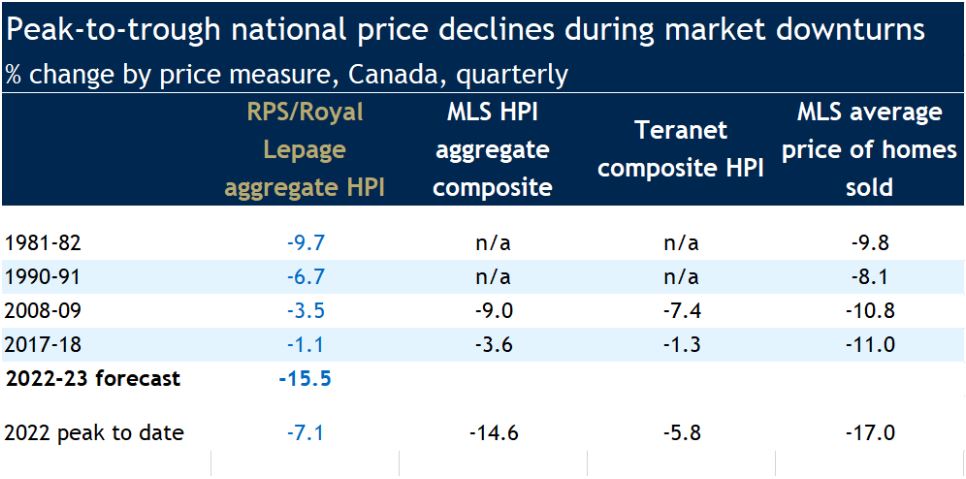
The slowdown in home sales nationwide has significantly moderated since the Fall of 2022, mainly because housing activity is already deeply depressed in most markets. This leaves little remaining downside, except for a major economic recession. The housing market recovery will slowly begin later in 2023, especially with affordability issues and the weakened economy holding back prospective homebuyers. The pace of recovery will gradually pick up in 2024 when the economy stabilizes, market inflation softens, and the Bank of Canada begins to trim down its key interest rate imposed in March 2022.
Impact on Buyers and Sellers For buyers, the forecast means that it may be a good time to purchase a home if they have the financial means to do so. With the decline in home prices, buyers will have the opportunity to purchase a home at a more affordable price. However, buyers need to consider their financial situation and whether they can handle the potential increase in mortgage rates when the Bank of Canada begins to trim down its key interest rate in 2024.
For sellers, the forecast means that they may need to adjust their expectations for their home’s selling price. With the decline in home prices, sellers may need to lower their asking price to attract buyers. It is also important to note that the housing market recovery will be slow, and sellers may need to be patient and flexible with their selling strategy.
Here are more insights from the report:
Activity is Quiet, But the Bottom is Near
Home resales have been declining since the market frenzy of 2020, but we believe the market is hitting bottom this spring. Resales are the quietest they’ve been in years, and we expect a bottom to form in the coming months. While some markets may recover faster than others, the primary reason for the slowdown is the lack of activity, and unless the economy dives, there’s little downside left.
Interest Rates are Stabilizing, But Won’t Prop Up the Market
The Bank of Canada’s rate hiking cycle is on hold, and we don’t expect any rate cuts until 2024. This should help stabilize the market, but won’t be enough to prop it up. Any downward drift in longer-term bond yields over the next year will be viewed as a positive sign of a turnaround, but the interest rate environment will remain restrictive for a while.
Prices are Expected to Drop Further in the Near Term
Home prices will continue to decline in the coming months, with the national RPS HPI likely to fall another 8% by the third quarter from fourth-quarter levels. Markets in B.C. and Ontario still face the biggest downside risk, with peak-to-trough price forecasts ranging from -19% in Ontario to -5% in Newfoundland and Labrador. Buyers will continue to face affordability challenges, especially in expensive markets like B.C. and Ontario. This means a quick market rebound is unlikely, and affordability issues will stand in the way of a material easing in buyers’ budget constraints.
Solid Market Fundamentals Despite the Correction
The market correction since March 2022 is a cyclical event marking the transition out of highly unusual circumstances like a global pandemic and exceptionally low-interest rates. However, structurally the market is sound. Inventories are still historically low, and Canada’s population growth is the highest in generations. Booming immigration will continue to fuel demand through the medium term and beyond.
Homebuilding is Key to Long-Term Balance
The recent track record for construction has been underwhelming, and homebuilding needs to ramp up considerably to accommodate the growth in households and address the housing affordability crisis in many Canadian cities. We estimate that at least 270,000 units must be built per year by 2025, but it’s unclear whether the construction industry has the capacity to do so in the face of significant labor shortages.
Canadian Provincial Housing Predictions
On a lighter note, the Canadian housing market, much like the human body, has experienced a correction from its pandemic highs. It has been a tough year for the market, but there is a glimmer of hope on the horizon. With falling interest rates, a tight labor market, elevated household savings and heightened immigration, experts expect the market to find a bottom by the end of this year. It’s like a phoenix rising from the ashes, ready to take flight once again.
A new report from Desjardins‘ economics team says that the Canadian housing market has experienced a significant correction from its peak during the pandemic. Existing home sales have dropped by over 38% from their peak in February 2022, and new listings have also decreased by almost 20% over the same period. The average home price has fallen by nearly 20%, while the benchmark home price, which adjusts for market composition, has decreased by approximately 14%.
This decline in sales, but relatively steady listings, has moved the national housing market into a more balanced territory compared to the start of last year when it leaned significantly in favor of sellers. Looking ahead, they predict that the Canadian housing market will hit its bottom by the end of the year. The Bank of Canada’s recent pivot suggests that the central bank is likely to remain on hold for the foreseeable future and may even begin cutting rates before the year is out.
However, high-interest rates will continue to affect housing market activity, while the effects of previous rate hikes have yet to be fully felt in the economy. The Canadian housing market’s correction may have a significant impact on Canadians, including a potential recession in 2023. Despite this, experts remain optimistic that the housing market will eventually recover.
While the national housing market is important, it’s important to note that all real estate is local. Each province has its unique economic developments, and this can lead to widely varying outcomes in the housing market. For example, Ontario, Canada’s most populous province, has borne the brunt of the housing market correction so far. However, it continues to attract immigrants, which should help underpin the residential real estate rebound as interest rates continue to decline.
British Columbia, which also relies heavily on the real estate sector, finds itself in a similar situation to Ontario. However, it too continues to welcome large numbers of newcomers, which should help drive the residential real estate rebound.
Quebec, on the other hand, is expected to continue to deteriorate in the coming months. Despite resumed immigration after the pandemic hiatus, it hasn’t been enough to spur new construction due to high-interest rates, leaving developers struggling to turn a profit.
One of the biggest surprises of 2022 was the resiliency of the housing markets of the Maritime provinces. Despite seeing the largest run-up in prices in Canada during the pandemic, prices have yet to adjust as much as they have in Central Canada or British Columbia. However, we may be seeing the early stages of a reversal in that trend, as a push from pandemic-related migration has now subsided.
The Prairie provinces, on the other hand, are expected to be at the top of the growth leaderboard in 2023. Commodity-driven growth is characterizing their outlook, with high commodity prices and an influx of newcomers to Canada and Canadians from other provinces looking for employment opportunities and more affordable housing options.
Overall, Canada’s housing market is on the path to recovery. We expect sales activity to gradually grind lower through 2023 before rebounding in the second half of the year and into 2024. Falling borrowing costs and support from elevated levels of immigration should help drive the market forward. While each province has its unique outlook, the housing market as a whole is set to soar once again.
Canadian Real Estate Bubble
The Canadian property bubble refers to a significant surge in Canadian real estate prices observed from 2002 to the present. Numerous observers have characterized this as a real estate bubble.
Contributing Factors to the Bubble
- House prices outstripping incomes
- Low interest rates since the 2008 financial crisis
- Mortgage debt service ratio surging to shocking levels
- Canadian homebuyers not having the same ability to lock in a long-term fixed rate mortgage
- Canadian private debt as a % of GDP surpassing Japan’s during the peak of its crisis in the early 1990s
- Canadian borrowers must renew their mortgages every five years
- Provinces and cities responsible for land-use planning, zoning, and permitting
- Real estate investors
- Foreign buyers
Experts warn that Canada is potentially facing one of the largest housing bubbles of all time, with predictions of a 24% decline in Canadian home prices. However, there is optimism that 2024 will bring more stability to the housing market. The declining mortgage rates are expected to contribute to mostly flat home prices throughout 2024.
More Topics For Reading:
Housing Market Forecast 2024 & 2025: Predictions for Next 5 Years
Where Are Housing Prices Falling in 2022?
Is it a Good Time to Buy a House or Should Wait Until 2024
Housing Affordability Crisis is Increasing in the United States
The Hottest Real Estate Markets of 2022
This article shouldn’t be used to make real estate or financial decisions. Some of this article’s information came from referenced websites. Norada Real Estate Investments provides no express or implied claims, warranties, or guarantees that the material is accurate, reliable, or current. All information should be validated using the below references. Norada Real Estate Investments does not predict the future Canadian housing market. Buying a property needs research, planning, and budgeting. Not all investments are good. Always do research and consult a real estate investment counselor.
Sources:
- https://stats.crea.ca/en-CA/
- https://wowa.ca/reports/canada-housing-market
- https://www.desjardins.com/qc/en/savings-investment/economic-studies/canadian-residential-real-estate-february-9-2023.html#
