


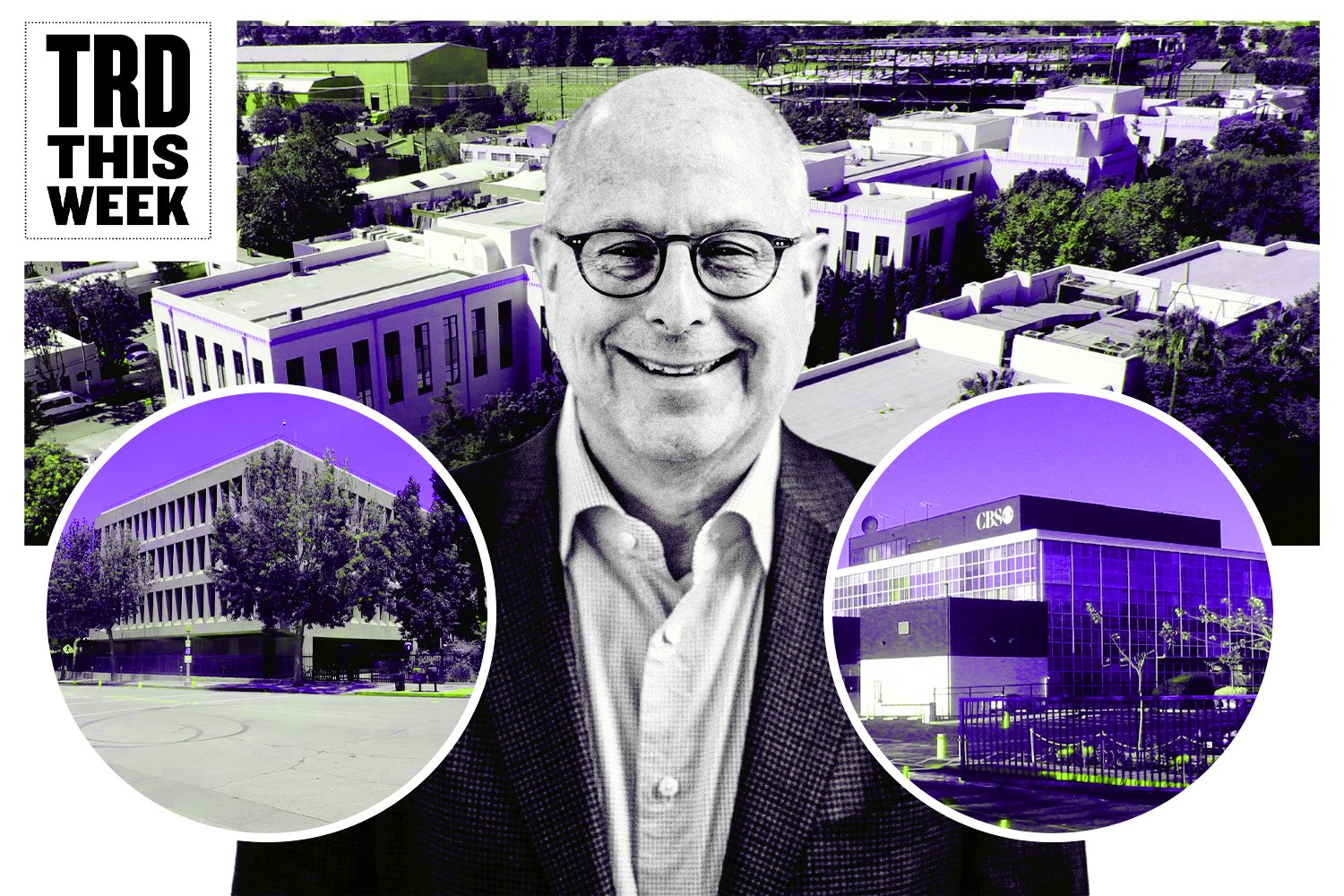
Is Michael Hackman a phoenix who will rise from the ashes? He seems to think so.
“We have a couple deals that we just made mistakes on, and we’re going to lose a lot of money on those properties, but that happens. We’ve accepted it, and now we’re moving on,” the world’s largest owner and operator of independent film and television studios said Tuesday at the Lot at Formosa in WeHo.
The Hackman Capital Partners boss was a last minute addition to the Bisnow conference — and a surprising one, given the company’s recent distress. He took the floor after decision makers chatted over coffee in the SoCal sun. Sunglasses and suits set the scene before the crowd entered stage seven, a soundstage with high ceilings and good acoustics. Hackman’s tenant, an Amazon Studios exec, moderated the chat, and softened blows where he could, but everyone there knows Hackman is in hot water.
He defaulted on a billion dollar mortgage on Radford Studio Center, then lost it to Goldman Sachs, which is now in talks with Netflix — who could purchase it for a lot less than Hackman’s price. Plus, he defaulted on a $100 million loan on what once was its Sony Pictures Animation campus in Culver City.
Lenders led by Deutsche Bank were recruiting brokers to market Hackman’s Television City and MBS, Bloomberg previously reported. A MBS default is official; he owes about $258 million on it, Bisnow reported.
By the way, we’ve heard the lender syndicate has tapped brokers to market the loans on the studios and chose CBRE for Television City and Cushman & Wakefield for MBS. Plus, a CW broker posted the $240 million note on Manhattan Beach Studios has hit the market, confirming the word on the street.
Hackman isn’t the only studio owner feeling the pain — and it’s not all bad — but the Los Angeles entertainment industry just isn’t what it used to be. The post-streaming wars world, dual actors’ and writers’ strikes, consolidation and cheaper costs abroad have all resulted in much fewer shootdays. When asked how he was holding up, Hackman said, “I’m holding up.”
The CEO cracked jokes on stage but was real, too. “It’s been a really tough time for studio owners. It’s really been difficult. We’ve all been going through it.”
Hackman’s appearance did include a sort of plea to politicians to bring back production beyond Gov. Gavin Newsom’s tax credit, which has helped some, but not enough. Hackman called what’s happening in the studio biz a confluence of events … “a black swan event.” Being on the front lines isn’t easy, he said, and it is hard to have hope.
“I’d love to tell the old joke about the light at the end of the tunnel — is it light or is it the freight train coming at you?” Hackman said.
But, he did say there is a light at the end of the tunnel. He sees it even if lenders and investors don’t yet. The studio business may look different but entertainment isn’t leaving L.A. His last quip of the chat: changing the HCP name to “Hindsight Capital Partners … we’re never wrong.”
Hollywood highlights
The two other panels, which included a former Netflix exec, a Hudson Pacific Properties EVP, Jeff Worthe and more, discussed it all. Here are some highlights:
- A year ago, you couldn’t tell when something was shot with artificial intelligence. Now, you can.
- At the moment, it isn’t about profit, it’s about servicing your debt.
- Don’t throw dirt on soundstages yet. It’s not totally gone. But, the studio business is circling the drain.
- Studios are some of the most expensive real estate to develop, so know what your users want to lure them in.
- Older directors will probably still want soundstages, but younger people may shift to tech, which costs millions of dollars less and will be an easier sell to studio heads.
- Backrooms versus Mission Impossible: You can make a million dollar movie, but there’s a difference between that and movies that cost much more and are shot on soundstages.
- This is the time to adapt if you want to remain relevant. Studios were overbuilt and now there’s competition elsewhere. Plus, more and more content is being filmed on phones. That all means less demand.
- My personal favorite, which came from Worthe: “The last three years have been no fun, but the four years before were pretty fun — so, it’ll be old champagne, but we’re going to get back to popping bottles again.”
More Tinseltown news
Elk Development is in default. The outfit owes about $60 million on Hollywood apartments. Acres Capital loaned Elk to develop the real estate, which is 180 so-called micro-units. The loan was later sold, and now the current noteholder, who claims Elk defaulted on the debt, is ready to foreclose.
Frankel keeps selling
Michael Frankel wants to sell more shares of his old REIT. The former co-CEO, via a recent Securities and Exchange Commission filing, proposed the sale of about 21,500 shares of Rexford, valued at more than $750,000. Frankel has been selling. In mid-March, before Laura Clark officially took the corner office (post-Elliott Investment stake), he disposed of more than 23,000 shares, which amounted to $800,000-plus in his pocket.
Read more

REIT’s new reality: Hudson Pacific trims Coleman’s compensation

Hackman defaults on $100M loan on creative office campus, faces foreclosure
