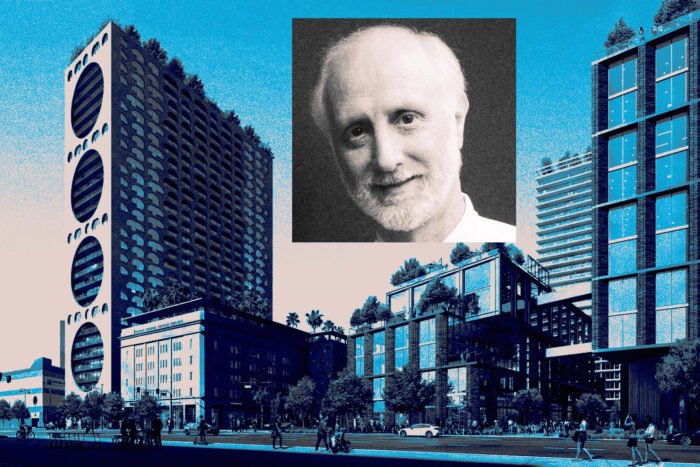
A new era for the Federal Reserve starts on Friday, as Kevin Warsh takes over leadership of the central bank amid historic political tension and controversy surrounding the nation’s monetary policy.
Warsh, a former Fed governor who served at the central bank during the Great Recession, takes the reins from Jerome Powell, whose second term as chair is expiring. Warsh will have a four-year term as chairman and a 14-year term on the Fed’s board of governors.
Although President Donald Trump himself appointed Powell as chair in 2017, the president has directed his wrath at Powell over the past year for keeping interest rates higher than Trump would prefer.
In response to a criminal probe launched by Trump’s Justice Department, Powell is taking the unusual step of remaining on the Fed’s board of governors indefinitely after fulfilling his term as chair. That alone will make Warsh’s tenure remarkable, as he votes on rate policy alongside a former chair.
Meanwhile, Warsh may find himself stuck between a president who insists on lower interest rates and a voting panel on the Federal Open Market Committee that appears increasingly skeptical of rate cuts.
At last month’s meeting of the FOMC, three “hawks” who favor higher interest rates dissented in the final vote, saying they supported holding rates steady, but did not support the statement issued with the decision, which they said should not include language suggesting the next move for interest rates will be a cut.
Cleveland Fed President Beth Hammack, Minneapolis Fed President Neel Kashkari, and Dallas Fed President Lorie Logan instead believe a rate hike could just as likely be the Fed’s next move. Their dissents may be intended to send a powerful message to Warsh as he prepared to take over.
Indeed, although he is now chairman of the Federal Reserve, Warsh will hold but one vote on the 12-member FOMC and will have to sway the majority to his side to make changes to rate policy.
“Practically speaking, could Warsh even convince this FOMC to cut right now? Highly unlikely. They’ve made their views known and put forecasts on the record,” says Realtor.com® senior economist Jake Krimmel. “Strategically speaking though, should he try? Also probably not. The incoming data, if anything, call for a hike before a cut right now.”
The Fed uses higher interest rates to tame inflation and lower rates to stimulate the job market, in line with the central bank’s dual mandate of price stability and maximum employment.
In just the past week, key federal reports have shown the job market remains surprisingly robust, while inflation is surging back up to a three-year high—a combination that seems to augur higher interest rates from the Fed.
Mortgage rates have already responded, spiking rapidly in March as an oil price shock from the Iran war raised concerns about inflation.
Warsh must demonstrate independence
On top of everything else, Warsh will now face the crucial task of convincing markets that he is an independent Fed chair who acts based on economic data and sound judgement, rather than political pressure or the whims of the president.
By law and tradition, the Fed is structured to be independent from political whim and influence. History shows that keeping interest rates artificially low for political purposes can lead to runaway inflation and capital flight. That would wreak havoc on the economy and ultimately driving up borrowing costs.
Instead, the Fed is supposed to set rates based on its mandate. Even so, policymakers often have honest disagreements about what interest rate would be ideal for the economy.
At his Senate confirmation hearing last month, Warsh insisted strongly that Trump had not given him a specific mandate on interest rate policy.
“I take my responsibility to be an independent leader of the Federal Reserve very seriously,” said Warsh. “The president never asked me to predetermine, commit, fix, decide on any interest rate decision in any of our discussions, nor would I ever agree to do so.”
Still, the economist Krimmel says that on the question of Warsh’s independence, “the consensus among Fed watchers leans skeptical for now.
“What’s confounded many is that Warsh was an inflation hawk when he served as a governor from 2006 to 2011, then turned into a dove when interviewing for the job of chair,” says Krimmel.
The inconsistency itself isn’t the problem, says Krimmel, as shifting information can and should prompt changing views. But Warsh’s track record raises concerns that his views on monetary policy may be influenced by who holds the White House.
“A chair who is not data-dependent cannot be independent,” says Krimmel. “In time, Warsh will have ample opportunity to prove his independence, but it will only truly be tested when he’s confronted with an economic crisis or is forced to make a politically unpopular call.”
Warsh’s unusual plan to lower mortgage rates
In essence, Warsh appears to believe that the Fed can create space to lower interest rates without stoking inflation, if it simultaneously reduces the size of the central bank’s balance sheet.
It is an untested theory, and it operates on the principle that two opposing forces will cancel out: looser monetary policy in interest rates, and tighter policy on the balance sheet.
Warsh has always been critical of the Fed’s large balance sheet, which ballooned during the Great Recession as the central bank vacuumed up securities from the open market, a process known as quantitative easing.
After unwinding some of those assets, the Fed began buying in earnest again during the COVID-19 pandemic, including purchases of trillions in mortgage-backed securities, which scholars believed helped push mortgage rates to ultralow levels below 3%.
More recently, Fannie Mae and Freddie Mac have pursued a similar plan at Trump’s direction, ballooning their mortgage holdings in an attempt to take duration out of the market and hold rates down.
But Warsh appears to favor unwinding that trade at the Fed, and selling off the central bank’s roughly $2 trillion hoard of mortgage bonds.
“The Fed’s bloated balance sheet, designed to support the biggest firms in a bygone crisis era, can be reduced significantly,” Warsh wrote in a recent Wall Street Journal op-ed. “That largesse can be redeployed in the form of lower interest rates to support households and small and medium-size businesses.”
The Fed selling off its mortgage bonds would put upward pressure on mortgage rates, but Warsh argues that effect could be counteracted by reducing the Fed’s short-term interest rate. It is a plan that has never been tried before.
Krimmel says that there is “also an important catch-22” for Warsh’s plan to trade a smaller balance sheet for lower rates.
“If markets think the Fed is making a policy error, like cutting while inflation is running hot, that mistake will get priced into the long end of the curve,” he says. “Practically speaking, long-term yields would rise and mortgage rates would go up even as the Fed is cutting its policy rate.”