


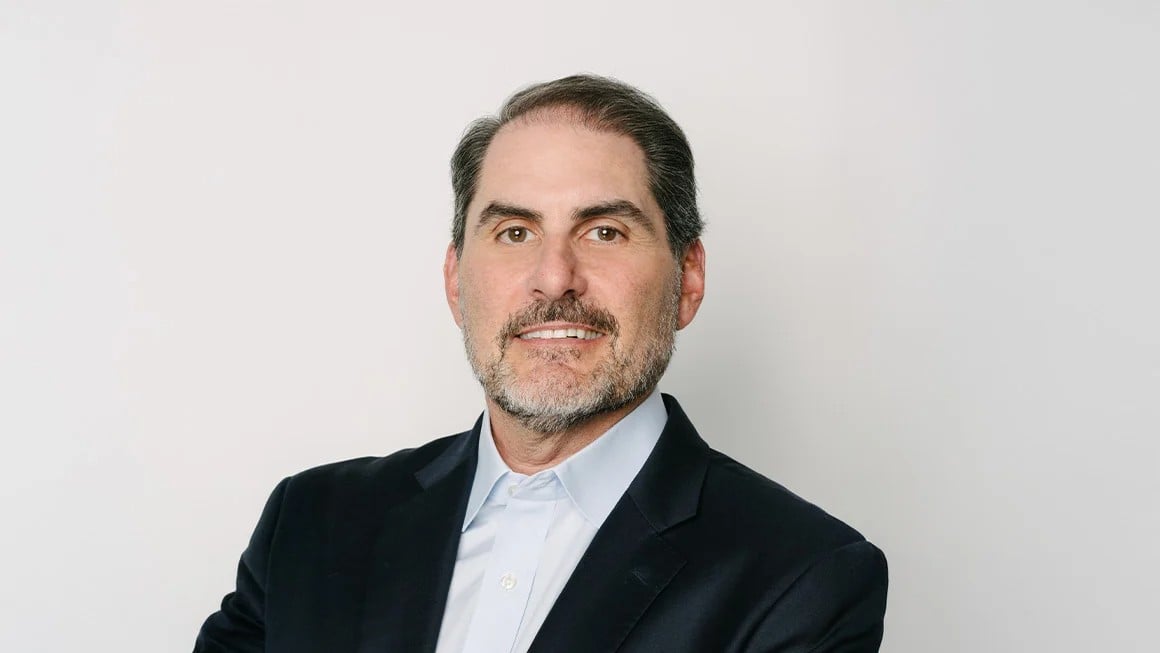
BGO and its parent, Sun Life, made commercial real estate headlines last month with the announcement that multifamily owner/operator Bell Partners and BGO would combine businesses. Sizable as that transaction is, it’s far from the whole story BGO has to tell. In advance of his participation in Connect Los Angeles 2026 on May 28, for which he will be a member of the Industry Leaders panel, BGO managing partner, head of U.S. Jonathan Epstein discussed the investment thesis the firm is pursuing both domestically and globally.
Q: Has BGO’s investment outlook changed since the beginning of 2026, whether internationally or domestically?
A: Our core thesis has not changed, but the path has been bumpier than we expected. Coming into the year, we held the view – against consensus – that a U.S. recession was not inevitable, that inflation was largely under control, and that capital markets were thawing. We still believe all of that. What’s shifted is the timeline. Mercurial trade policy, followed by geopolitical volatility, has delayed the recovery we were expecting rather than derailed it.
Domestically, we remain constructive. We think the Fed has more room to cut, the 10-year is mostly anchored around 4% plus or minus 25 basis points, and U.S. growth is better than the headlines suggest—supported by outsized manufacturing capex, AI investment, productivity gains, and a policy backdrop that continues to incentivize onshoring. The numbers on that last point are striking: over a trillion dollars in announced U.S. manufacturing capital spending – roughly $270 billion in pharmaceuticals over the next 5-10 years, $200-300 billion in semiconductors, and $20-30 billion annually in defense and industrial. That’s a structural reindustrialization of the U.S. economy, and it creates durable real estate demand—for power, logistics, industrial, and the housing that supports those workforces.
Internationally, the picture has actually improved. Europe is set up for what may be its strongest decade in two generations, with defense and capex spending, easing rates, and selective dislocation across the GP universe creating attractive entry points—particularly in Spain, Italy, the Nordics, Germany, and a re-priced UK. Asia Pacific is steadier, with Japan remaining a standout for office.
At the firm level, we’ve also been building the platform with intention. In March, Sun Life—BGO’s parent — entered into an agreement to acquire Bell Partners, a leading U.S. multifamily investment and operating platform with approximately $10 billion of assets under management. Once closed, the transaction will bring BGO’s AUM above $100 billion and, combined with our existing exposure, take the platform to more than 40,000 owned units and over 70,000 total units under management. It reflects our strong conviction in U.S. multifamily – a sector where demand fundamentals remain durable, the country is structurally under-housed, and many global investors remain under-allocated.
Q: How has BGO’s global cold-chain involvement evolved, and where are the regional supply dislocations?
A: Cold storage has moved through distinct phases — from an overlooked niche a decade ago, to an institutional boom during COVID, to the recalibration we’ve been in since 2023. We think the next chapter is stabilization, and the setup is probably the most attractive it’s been since we entered the space. Supply has reset dramatically — deliveries are down roughly 65% from the 2023 peak — and permanent debt markets for stabilized core are back, which tells us institutional capital is committing again. In that environment, scale and discipline matter a lot more than they did during the boom.
Our own footprint in the sector has deepened materially over the past five years. We started with a single real estate transaction in 2018, then participated in Lineage Logistics’ pre-IPO growth round—Lineage is now publicly traded. We’ve since launched a dedicated development vehicle for modern Class A facilities across the U.S., added smaller infill acquisitions, and engaged our lending and credit team in financing opportunities. That breadth — equity development, infill acquisitions, and credit — gives us multiple ways to deploy capital across the cycle.
What stands out today is how uneven the supply picture looks across markets. Markets like Texas, parts of Florida, and Chicagoland have absorbed meaningful new supply above the long-term average, creating near-term disruption but eventual opportunity. In contrast, high-barrier markets like the Northeast and West Coast have seen limited new supply and remain more stable. We’re focused on markets where demand drivers — port volumes, food distribution networks, demographic growth — are strong but recent deliveries have been limited, and on tenant-driven development where underwriting is anchored to actual demand rather than speculation. Our pipeline today is weighted toward the Central and Western U.S., with meaningful allocations to the Southeast and Canada, and demand is almost entirely coming from food distribution, grocery, and pharma.
On the demand side, we continue to see food manufacturers and pharmaceutical companies seeking supply chain control and bespoke facilities through new development. At the same time, we’re identifying value-add acquisition opportunities — potentially with tenants already in place —in markets experiencing near-term disruption, which we think could serve as attractive entry points.
Q: Within the core plus universe, what sectors look especially attractive as we go through 2026?
We organize our core plus strategy around three themes: Power & Logistics, Healthcare, and Housing. All three are being driven by durable demographic demand on one side and capital-markets dislocation on the other—which is what creates mid-risk, mid-return entry points.
Power & Logistics is one of our largest allocations today and continues to deliver meaningful rent growth. The through-line is access to power—whether that’s modern logistics, advanced manufacturing, or industrial adjacent uses like cold storage and IOS. The constraint on new supply is real and getting tighter.
Healthcare is where we have strong conviction on a forward basis. High-acuity medical office and pharma related cGMP have very durable demographic tailwinds, and portfolio aggregation dynamics in the sector are creating attractive entry points. Expect that allocation to grow meaningfully over the course of 2026.
Housing rounds out the themes, and it may be where we have the deepest structural conviction of all. Delayed first-time homebuyer formation, a housing shortage of more than 4-5 million units, and a rent-versus-own affordability gap near a 25-year high are all durable demand drivers for institutional-quality multifamily – and values have yet to reconnect with prior cyclical highs, giving us the opportunity to acquire well-located assets at meaningful discounts to replacement cost.
Across all three themes, we’re consistently underwriting to pricing below replacement cost and below intrinsic value, which we think is the most important discipline in this environment.
Q: Where do you see the opportunities for BGO’s new U.S. value-add industrial strategy?
A: We are one of the largest logistics investor/owners (Top 5) and a longstanding investor in the space in the US. We have been consistent investors in the space, up and down the risk spectrum and both equity and credit and currently we think this is one of the more favorable entry points for industrial we’ve seen in roughly two decades, and our various investment vehicle strategies are built to capture three distinct but reinforcing opportunities.
The first is strategic acquisitions of high-quality logistics assets where temporary oversupply has pushed vacancy higher and created what we’d call “high-quality vacancy on sale.” We’re investing in top-quartile markets, at meaningful discounts to replacement cost, and creating value through mark-to-market leasing and lease-up.
The second is selective development. New supply is down more than 50% from peak, and the development pipeline is approaching decade lows. That sets up a compelling window to build best-in-class product in markets we’ve identified through our data-science research models – but only where we have sufficient power. Grid bottlenecks have become the real gating factor for new development across most of the country, and that’s created a scarcity premium for sites that can actually be built.
The third bucket is industrial-adjacent: powered land that can serve data center demand, infill IOS sites in constrained submarkets, and advanced-manufacturing assets benefiting from onshoring. These are adjacencies where our industrial platform gives us an edge on sourcing and underwriting, and they add diversification without diluting our core logistics thesis.
Put simply, the macro tailwinds for industrial—above-trend growth, easing rates, automation, supply chain resilience, policy-driven reinvestment in U.S. manufacturing—are converging with a supply/demand imbalance squarely in our favor and normalizing capital markets. That combination doesn’t come along often.
Hear from LA Leadership on May 28.
Gain direct insight from Los Angeles leadership, including Mayor Karen Bass and former Mayor Antonio Villaraigosa, as they discuss policy, growth, affordable housing and the city’s future. Don’t miss this high-level conversation—secure your spot today: www.connectLA26.com
